Of which 8.2 g sugars and 12.8 g saturated fat.
Values are for the first option listed in the ingredients; substitutions and variations change them. Carbs exclude fiber; energy uses the EU conversion factors (fiber at 2 kcal/g). Source for sugars and saturated fat: Portuguese Food Composition Database (Base de Dados da Composição de Alimentos), Instituto Nacional de Saúde Doutor Ricardo Jorge, I. P. — INSA, v 7.1 - 2026.
Quantities and times are a starting point: adjust them to your taste. Two things don't change: poultry and ground meat must be cooked all the way through, and allergens — always check the labels.
Highlights Reduced tomato, cured pork, sheep's milk cheese
Allergens gluten, milk, sulfites
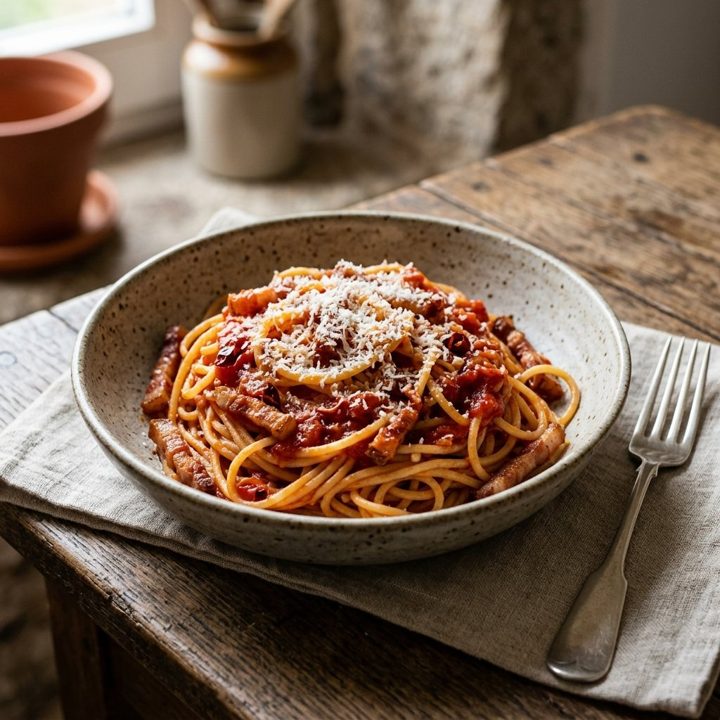
Spaghetti all'amatriciana
Guanciale, tomato and pecorino
A rich tomato sauce, guanciale and Pecorino: three distinct flavors in a pasta dish tied to Amatrice, in Lazio. Spaghetti keeps the link to the town; bucatini are the best-known version in Rome.
Ingredients
- 180 g (6½ oz) dried spaghetti
- 70 g (2½ oz) guanciale, rind removed
- 350 g (12½ oz) canned peeled tomatoes with their juice
- 40 g (1½ oz) pecorino
- 40 g (1½ oz) dry white wine
- 0.3 g dried chili
- ½ g black pepper
- water and coarse salt for cooking the pasta, as needed
Method
- Crush the tomatoes in a bowl with a fork. Grate the cheese and divide it into 30 g for tossing and 10 g for serving.
- Cut the guanciale into 5 mm strips. Put them in a cold skillet, without oil, and heat over medium-low.
The full method (12 steps), Rico's tip, the variations and storage are in the ebook “Pasta”. The English edition is coming soon.
More like this
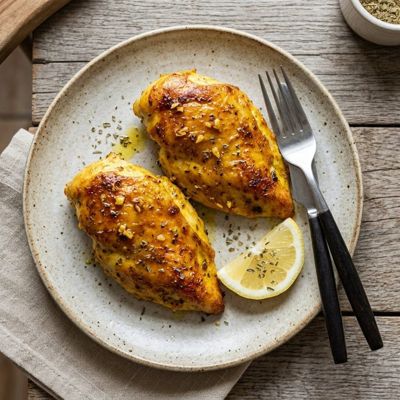
Golden turmeric and lemon chicken
Juicy chicken in a quick spice and citrus marinade.
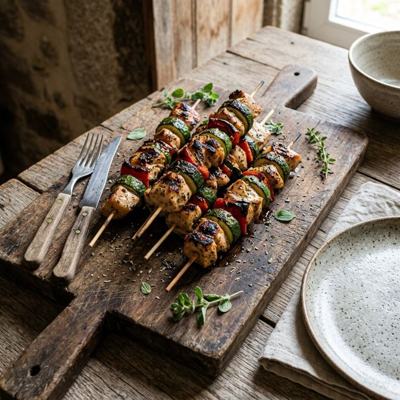
Chicken skewers with zucchini and bell pepper
Colorful skewers ready in half an hour, with no pans to clean.
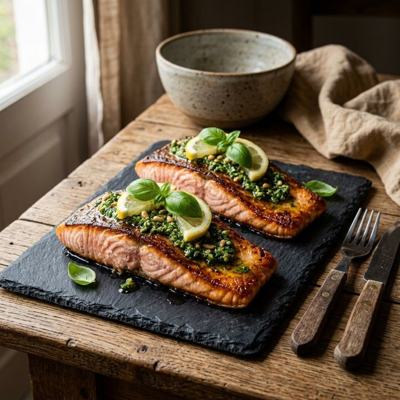
Salmon with basil pesto
Pink inside, crisp outside, ready in 22 minutes.