Of which 5.9 g sugars and 15 g saturated fat.
Values are for the first option listed in the ingredients; substitutions and variations change them. Carbs exclude fiber; energy uses the EU conversion factors (fiber at 2 kcal/g). Source for sugars and saturated fat: Portuguese Food Composition Database (Base de Dados da Composição de Alimentos), Instituto Nacional de Saúde Doutor Ricardo Jorge, I. P. — INSA, v 7.1 - 2026.
Quantities and times are a starting point: adjust them to your taste. Two things don't change: poultry and ground meat must be cooked all the way through, and allergens — always check the labels.
Highlights A Roman mash-up · Egg yolk added off the heat · Special-occasion dish
Allergens gluten, egg, milk
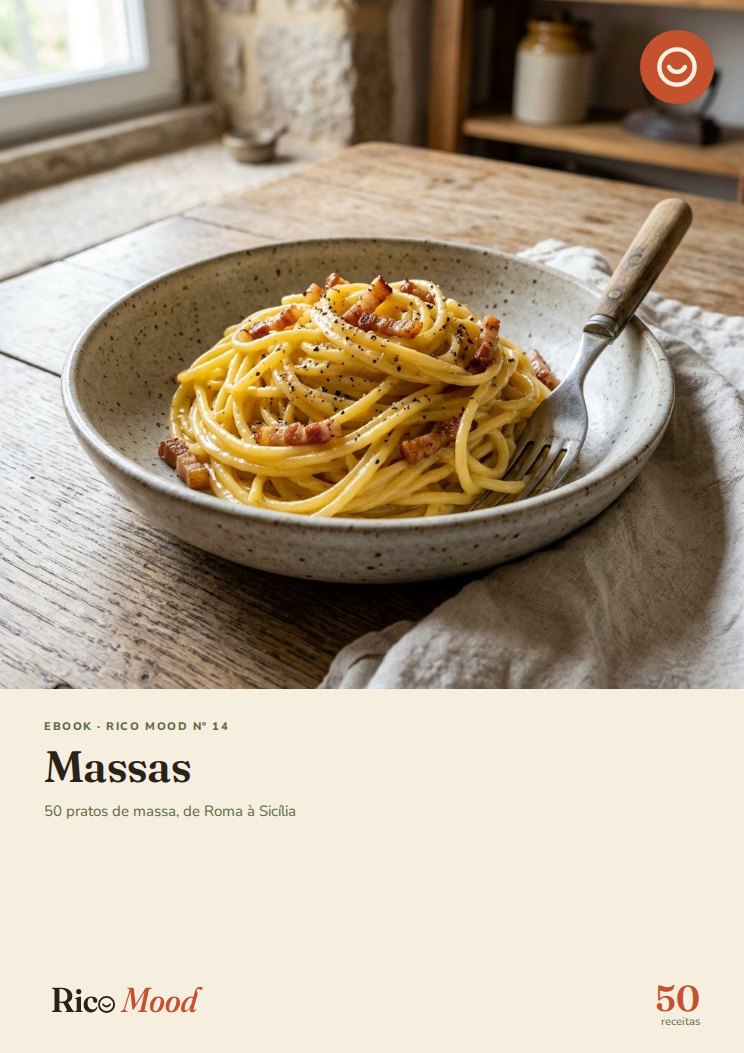
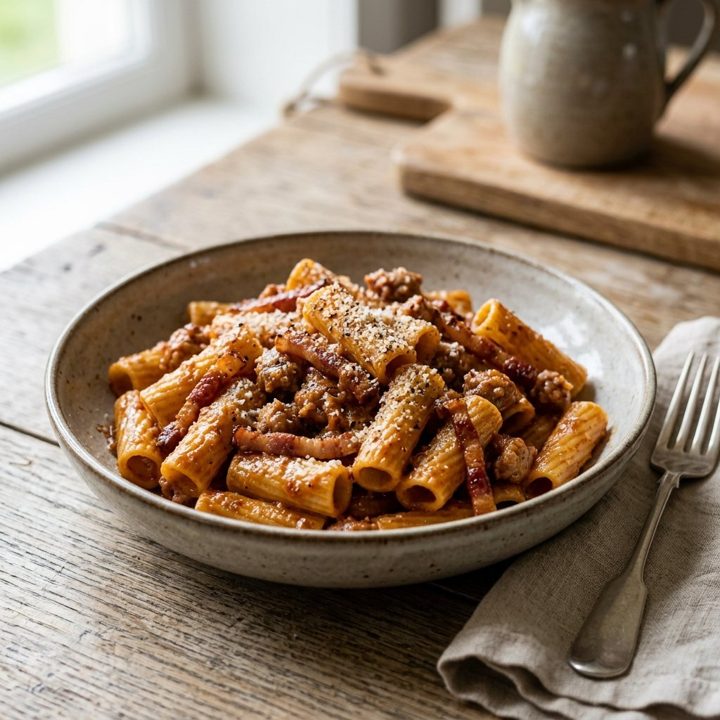
Rigatoni alla zozzona
Carbonara and amatriciana together, with Italian sausage
A deliberately rich Roman dish that crosses elements of carbonara, amatriciana and gricia: guanciale, sausage, tomato, egg yolks and Pecorino. This version trims the very generous amounts of some versions but keeps its identity. The yolk and cheese mixture goes in off the heat so it stays creamy, never scrambled.
Ingredients
- 320 g (11½ oz) dried rigatoni
- 100 g (3½ oz) guanciale
- 160 g (5½ oz) fresh pork sausage
- 350 g (12½ oz) unsalted peeled tomatoes
- 60 g (2 oz) pasteurized egg yolks
- 80 g (2¾ oz) Pecorino Romano
- 0.6 g black pepper
- water and coarse salt for cooking the pasta, as needed
Method
- Cut the guanciale into even strips. Remove the sausage casing and break the meat into 1–2 cm (¾ in) pieces. Keep both refrigerated until the pot is ready.
- Put the guanciale in a cold Dutch oven and heat gradually for 6–8 minutes, until it renders its fat and browns. Remove half the strips to paper towels and set aside for finishing.
The full method (10 steps), Rico's tip, the variations and storage are in the ebook “Pasta”. The English edition is coming soon.