Of which 3.7 g sugars and 16.2 g saturated fat.
Values are for the first option listed in the ingredients; substitutions and variations change them. Carbs exclude fiber; energy uses the EU conversion factors (fiber at 2 kcal/g). Source for sugars and saturated fat: Portuguese Food Composition Database (Base de Dados da Composição de Alimentos), Instituto Nacional de Saúde Doutor Ricardo Jorge, I. P. — INSA, v 7.1 - 2026.
Quantities and times are a starting point: adjust them to your taste. Two things don't change: poultry and ground meat must be cooked all the way through, and allergens — always check the labels.
Highlights Browned guanciale, aged cheese, sauce bound with pasta water
Allergens gluten, milk
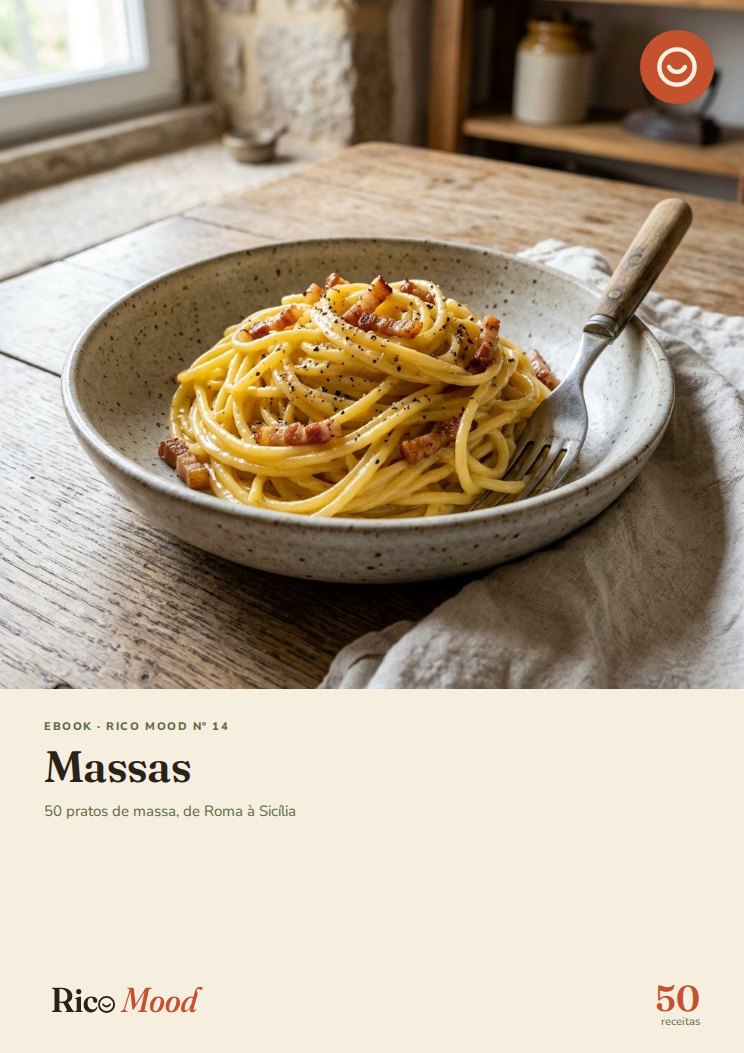
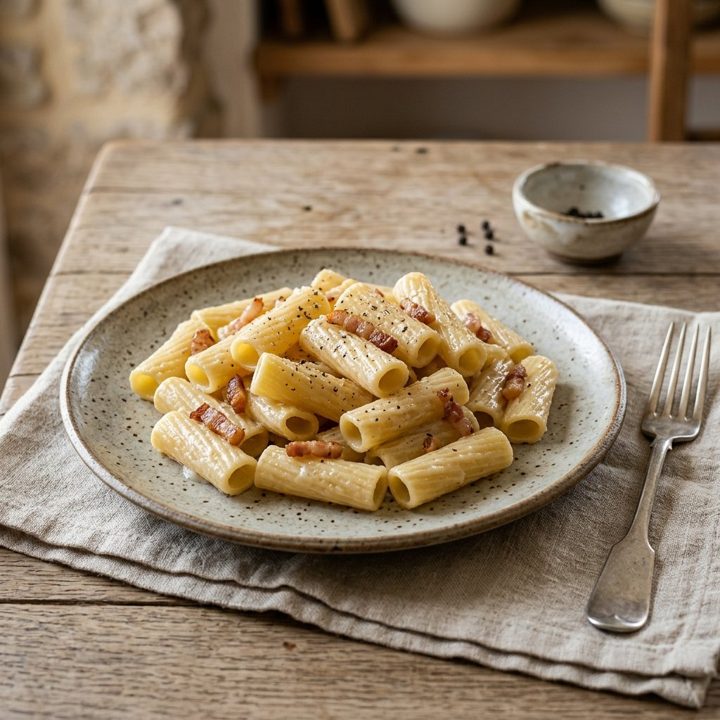
Rigatoni alla gricia
Guanciale, pecorino and pepper
Rigatoni with a creamy outside, a firm center and golden guanciale. Gricia belongs to the repertoire of Lazio and combines cured pork, sheep's milk cheese and pepper — it's amatriciana before there was tomato.
Ingredients
- 180 g (6½ oz) dried rigatoni
- 90 g (3¼ oz) guanciale, rind removed
- 50 g (1¾ oz) Pecorino Romano
- 1 g black pepper
- water and coarse salt for cooking the pasta, as needed
Method
- Weigh the meat after removing the rind. Cut it into strips about 5–6 mm thick, so they brown evenly.
- Grate the Pecorino finely. Keep 5 g for the plates and put the remaining 45 g in a bowl at room temperature.
The full method (12 steps), Rico's tip, the variations and storage are in the ebook “Pasta”. The English edition is coming soon.