Of which 1.1 g sugars and 0.9 g saturated fat.
Values are for the first option listed in the ingredients; substitutions and variations change them. Carbs exclude fiber; energy uses the EU conversion factors (fiber at 2 kcal/g). Source for sugars and saturated fat: Portuguese Food Composition Database (Base de Dados da Composição de Alimentos), Instituto Nacional de Saúde Doutor Ricardo Jorge, I. P. — INSA, v 7.1 - 2026.
Quantities and times are a starting point: adjust them to your taste. Two things don't change: poultry and ground meat must be cooked all the way through, and allergens — always check the labels.
Highlights Three flours · Oval shape · Handy par-baking
Allergens gluten, soy
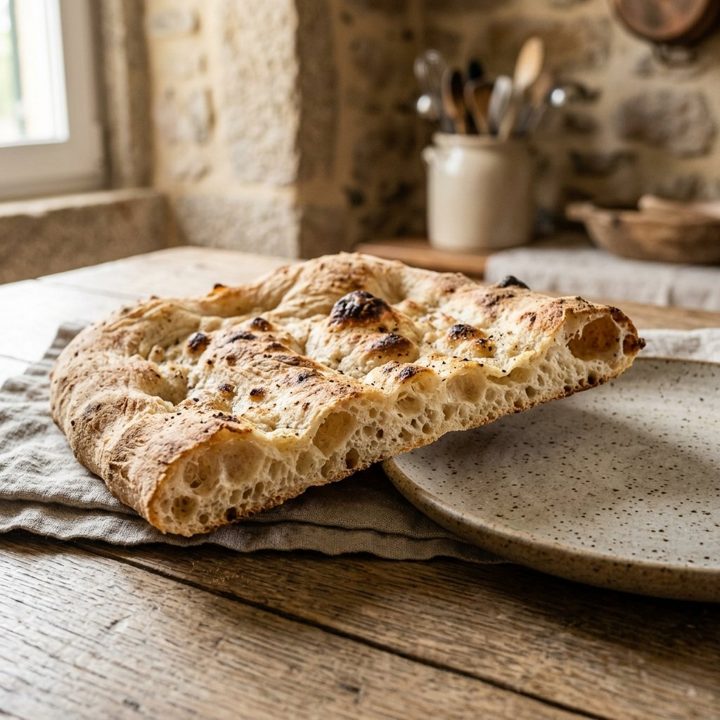
Pinsa
Oval base, light and crisp
Contemporary Roman pinsa was born in 2001, as a commercial creation by Corrado Di Marco, based on a blend of wheat, rice and soy flours with sourdough. It isn't a recipe from ancient Rome, despite what the name suggests. This is an original home blend, without sourdough: light, oval, crisp outside and open inside.
Ingredients
- 450 g (16 oz) bread flour
- 30 g (1 oz) fine rice flour
- 20 g (¾ oz) toasted whole soy flour
- 390 g (14 oz) water
- 12 g fine salt
- 10 g olive oil for the dough
- 1 g instant dry yeast
- 12 g olive oil for the surface
Method
- Make sure the soy flour is toasted and meant for cooking. Mix the three flours very thoroughly so there are no concentrated pockets of rice or soy flour.
- Add the yeast and 330 g of the water. Stir until no dry flour remains. Cover and rest for 25 minutes.
The full method (12 steps), Rico's tip, the variations and storage are in the ebook “Pizzas”. The English edition is coming soon.
More like this
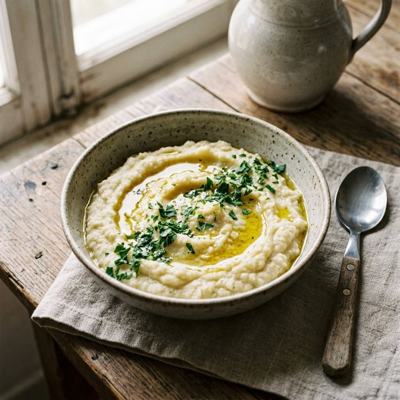
Cauliflower mash with golden garlic
A light alternative to mashed potatoes, ready in 20 minutes.
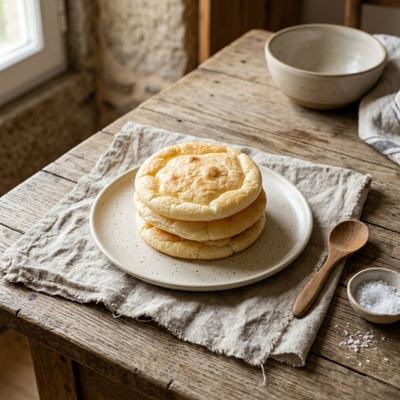
Cloud bread
Light as a cloud and flour-free, to swap in for bread in a lighter sandwich.
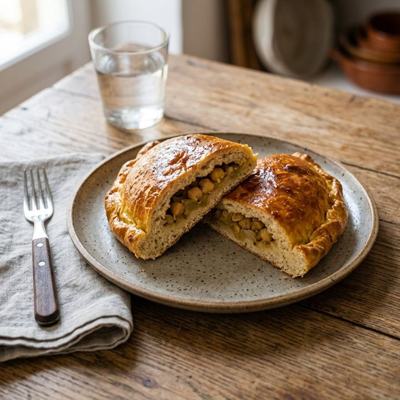
Base dough for stuffed bread
The dough for wrapping fillings — chicken, vegetables, whatever you have on hand.