Of which 8 g sugars and 4.8 g saturated fat.
Values are for the first option listed in the ingredients; substitutions and variations change them. Carbs exclude fiber; energy uses the EU conversion factors (fiber at 2 kcal/g). Source for sugars and saturated fat: Portuguese Food Composition Database (Base de Dados da Composição de Alimentos), Instituto Nacional de Saúde Doutor Ricardo Jorge, I. P. — INSA, v 7.1 - 2026.
Quantities and times are a starting point: adjust them to your taste. Two things don't change: poultry and ground meat must be cooked all the way through, and allergens — always check the labels.
Highlights Sicilian sweet and savory · Fresh sardines · Toasted mollica
Allergens gluten, fish, tree nuts, pine nuts
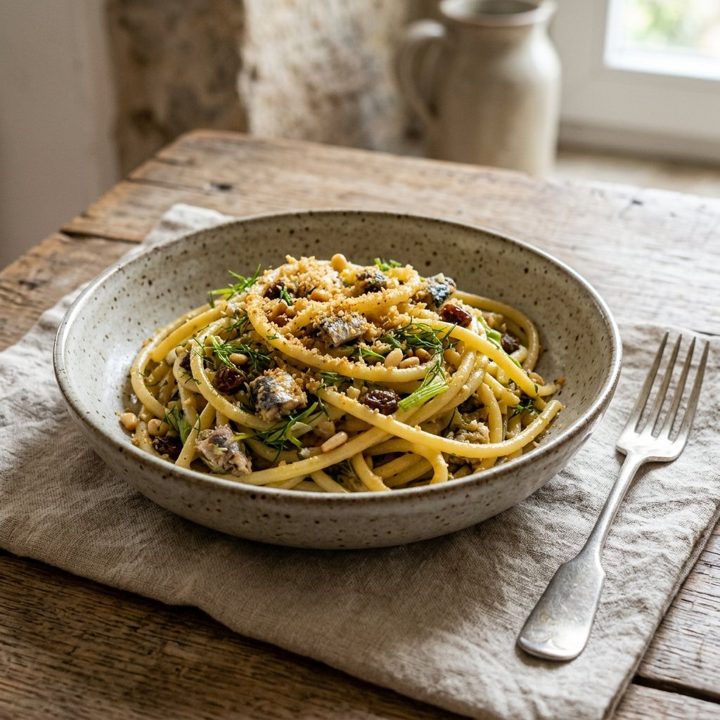
Bucatini con le sarde
Sardines, fennel, raisins and pine nuts
A Sicilian classic balanced between sweet, salty and herbal: fresh sardines, fennel, raisins, pine nuts, saffron, anchovy and toasted breadcrumbs coat the bucatini. Wild fennel is hard to find outside Sicily; here, the tender fronds of cultivated fennel stand in.
Ingredients
- 320 g (11½ oz) dried bucatini
- 240 g (8½ oz) raw sardine fillets
- 160 g (5½ oz) fennel
- 120 g (4 oz) onion
- 45 g (1½ oz) extra-virgin olive oil
- 30 g (1 oz) raisins
- 30 g (1 oz) pine nuts
- 10 g canned anchovies
- 40 g (1½ oz) breadcrumbs
- 0.1 g saffron
- 0.3 g black pepper
- water and coarse salt for cooking the pasta, as needed
Method
- Ask for sardines fit to eat that same day. Keep them at ≤4 °C (39 °F), clean them, remove any visible bones, rinse quickly in cold water and dry very well. Wash your hands and utensils after handling the raw fish.
- Soak the raisins in warm water for 10 minutes. Toast the pine nuts in a dry skillet for 2 minutes and set aside.
The full method (10 steps), Rico's tip, the variations and storage are in the ebook “Pasta”. The English edition is coming soon.